

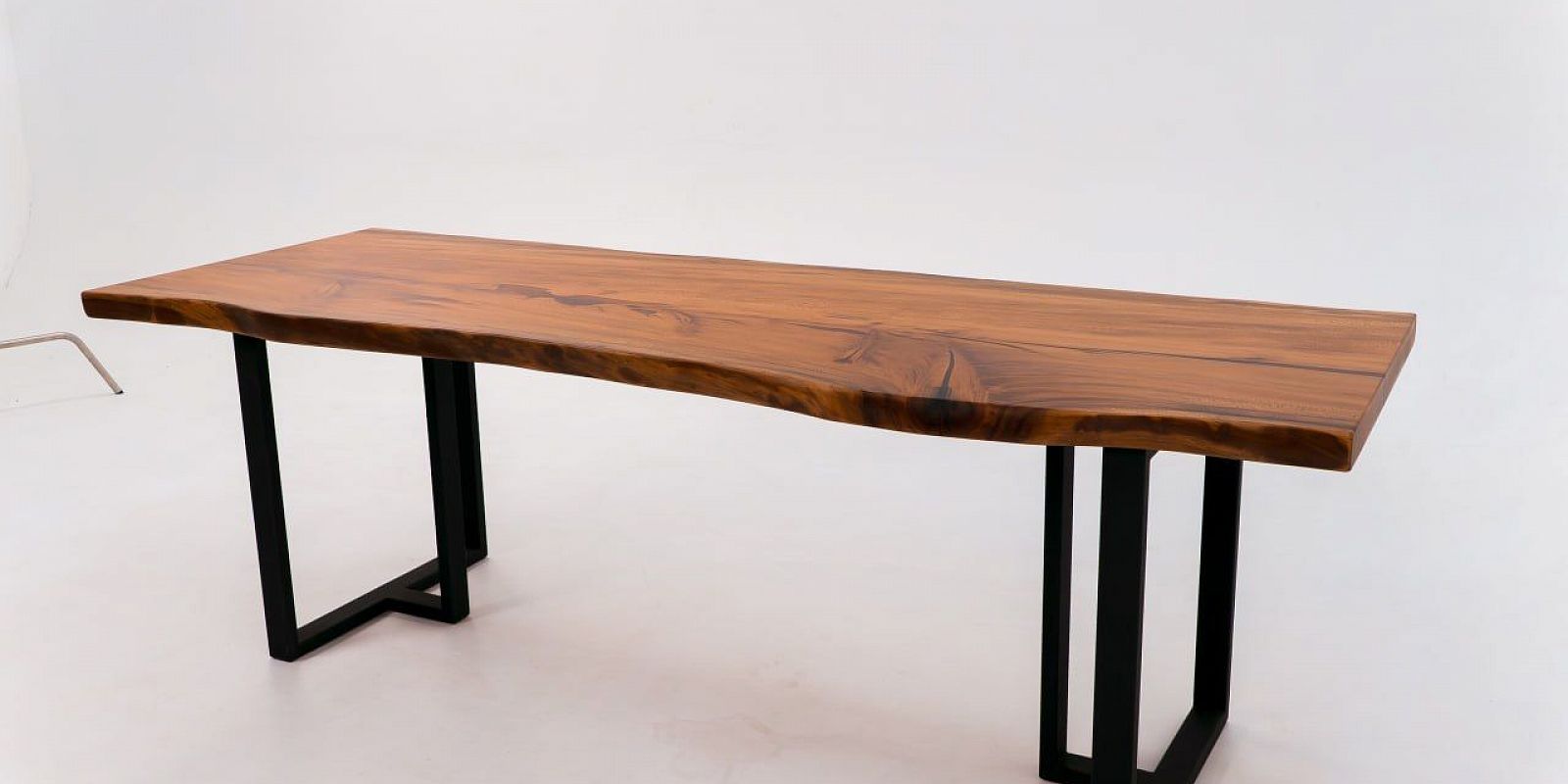
Solid wood furniture doesn't need complicated care, but it is a living material: it responds to humidity, temperature, sunlight and water. Follow a few simple rules and a table or sideboard will look good for many years, while minor signs of use can be dealt with at home rather than in the workshop.
Everyday care
- Wipe the surface with a soft cotton or microfibre cloth, lightly dampened with water, then dry it straight away.
- Avoid scouring pads, powders and cleaners containing chlorine, alcohol or ammonia — they damage oil and wax finishes.
- For greasy marks, use a mild solution of neutral soap, then wipe with a clean damp cloth followed by a dry one.
- Wipe up spills — wine, coffee, juice — immediately, before they soak in.
Heat, water and scratches
Oil and wax protect wood, but they don't make it indestructible. A hot dish can leave a pale mark, and a glass covered in condensation can leave a white ring. Use trivets and coasters, place mats under plates and a saucer under flower vases.
- Never put pots and pans straight on the tabletop.
- Don't cut food directly on the table — use a chopping board.
- Fit felt pads to chair legs and the bases of decorative objects.
- Stand ceramics with rough bases on a mat to avoid scratching.
Indoor climate
Wood takes in and releases moisture along with the air around it. Sharp swings make a board move slightly, which can lead to fine cracks or a small bow. Furniture is happiest at a steady room temperature and moderate humidity — worth keeping in mind in homes where the air conditioning runs all day.
- Keep furniture away from radiators, heaters, fireplaces and air-conditioning vents.
- If the air is very dry, a humidifier helps.
- Try not to leave the table in direct sun all day: wood changes tone in daylight, and objects left in one place can leave lighter patches.
Refreshing the finish
An oil finish wears thinner over time, especially on dining tables. When the surface looks dull and feels dry, and water no longer beads on it, it's time to refresh it. This is usually easy to do yourself: clean the surface, lightly sand with fine abrasive if needed and apply a thin coat of the same oil used on the piece. Your manager can tell you exactly which product was used.
If something goes wrong
Small scratches and marks on an oiled surface can usually be repaired locally. Deep damage, cracks or chips in epoxy are best seen by a craftsman: send photos to your manager and we'll tell you whether it's a home fix or the piece should come back to the workshop.
Related products
-
No. LM-57551378
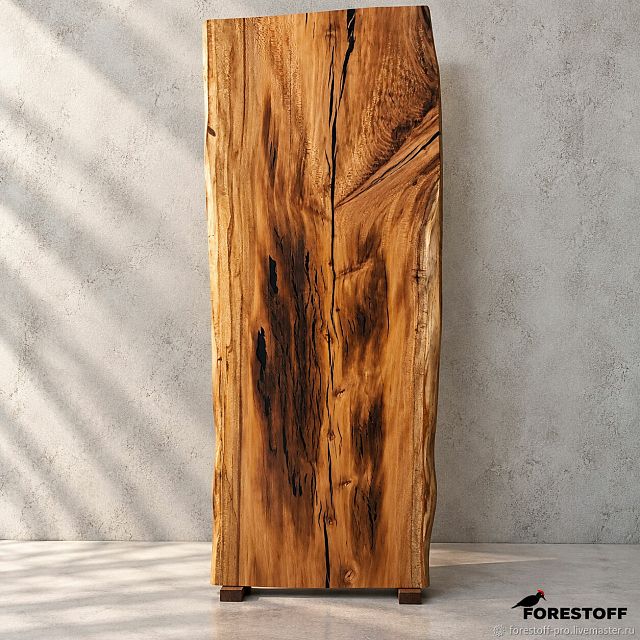
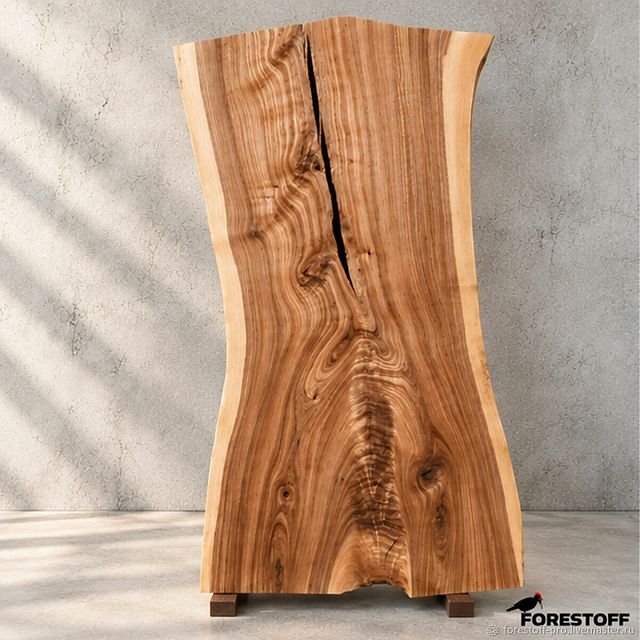
Guardian — 236 cm plane tree slab tabletop
Oriental plane · 2360 × 760–820 × 55 mm
In stock
-
-
Read also
- Restoring and refinishing wood furniture
When you can refresh the finish yourself and when it's better to bring the piece to the workshop.