

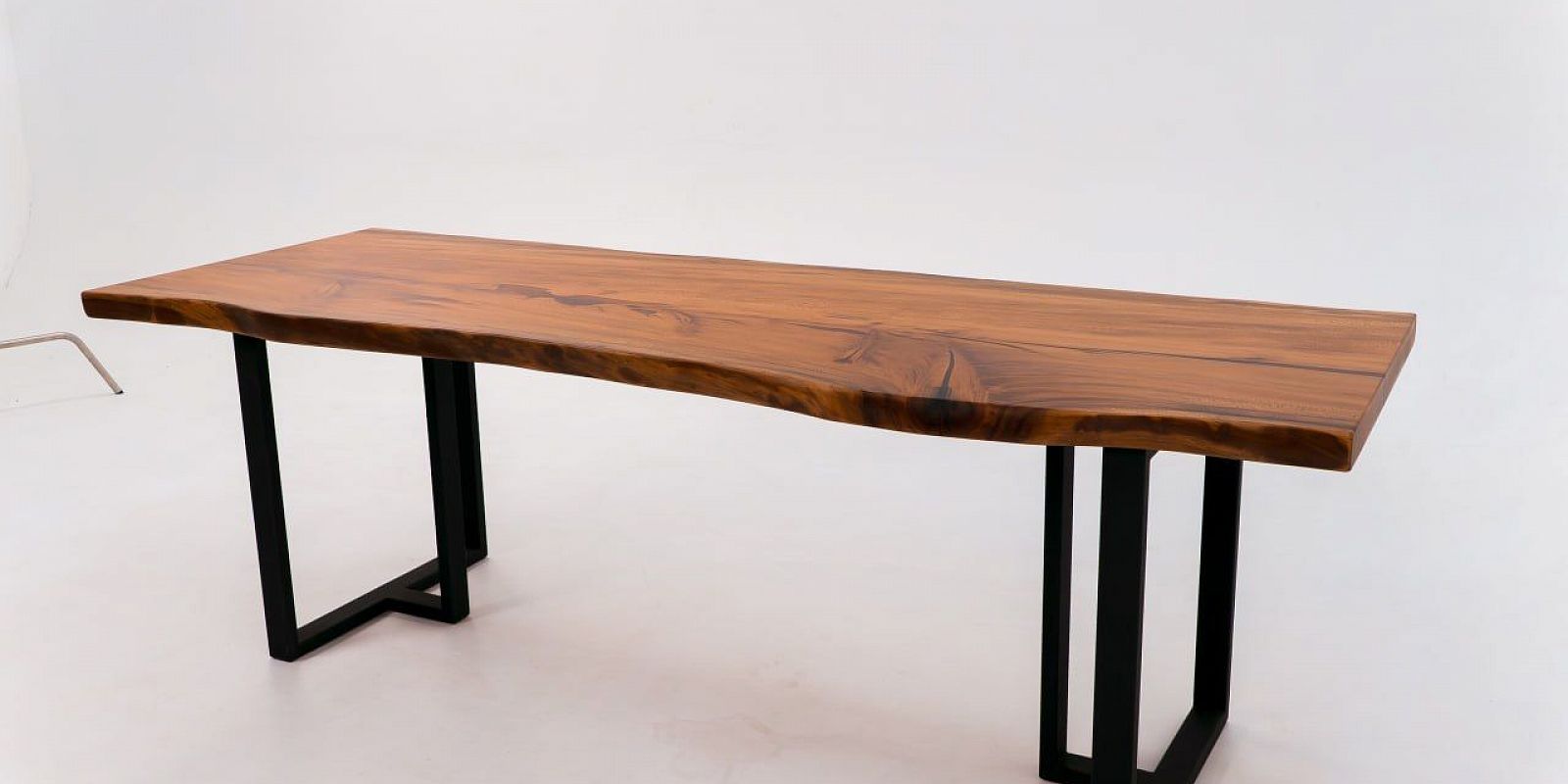
Even with careful use, solid wood furniture picks up signs of life over time: worn patches, pale rings from glasses, fine scratches. The good news is that solid wood can be refinished again and again — unlike veneer or laminate. Here's what you can do at home and what's better left to the workshop.
Signs it's time
- The surface looks dry and dull, especially where people sit most often.
- Water no longer beads up but soaks in quickly and leaves a dark mark.
- Pale marks have appeared from heat or water.
- The colour is uneven: lighter under objects, darker in exposed areas.
Refreshing an oil finish yourself
- Clean off dust and grease with a mild soap solution and let the surface dry completely.
- For fine scratches or marks, sand the area lightly with fine abrasive, following the grain.
- Apply a thin coat of the same oil used on the piece with a lint-free cloth.
- After the time stated by the oil manufacturer, wipe off the excess with a dry cloth — don't skip this, or the surface will stay tacky.
- Let it dry fully before putting anything back on the table.
Check with your manager which product was used on your piece: different oils and waxes shouldn't be mixed.
A word of warning: oily rags
Cloths soaked in oil can self-ignite. After use, lay them flat to dry outdoors, or soak them in water and dispose of them in a sealed container.
Best left to the workshop
- Deep scratches, dents and chips.
- Cracks that are growing or get in the way.
- Damaged lacquer — hard to repair locally without a visible line.
- Scratches or clouding in epoxy, which need specialist polishing equipment.
- A complete change of finish, for example from lacquer to oil, or a change of colour.
- A loose frame or base.
How restoration works with us
Send your manager photos of the piece and the damage. We'll assess the job and suggest either a craftsman visit for minor repairs in Sochi or bringing the piece to our workshop. There we strip the old finish, sand the surface, stabilise any cracks and correct the geometry if needed, then apply a new finish. Price and timing depend on the size of the piece and the condition of the surface.
Making the finish last longer
The more regular the care, the less often serious restoration is needed. Use coasters and mats, wipe up spills at once and keep furniture away from heaters and direct sun. A timely light re-oil is far simpler than a full resand.
Furniture from other makers
We can also refinish solid wood furniture that wasn't made by us. Whether it's possible and what it will cost is decided after an inspection.
Related products
-
No. LM-57551378
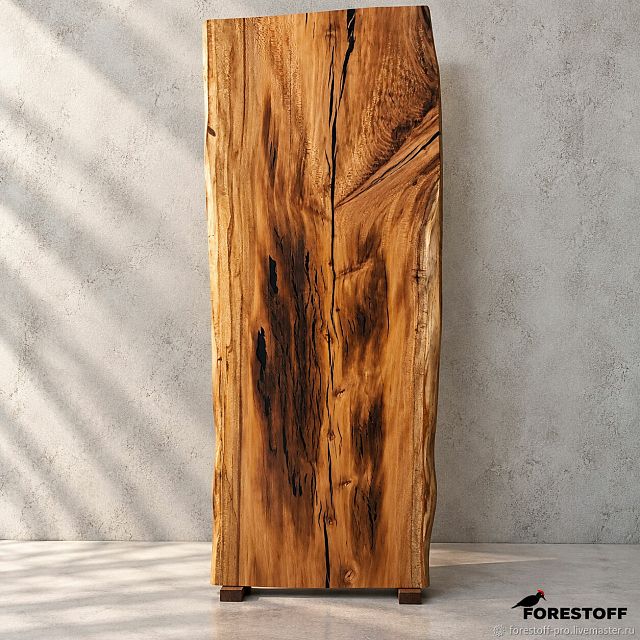
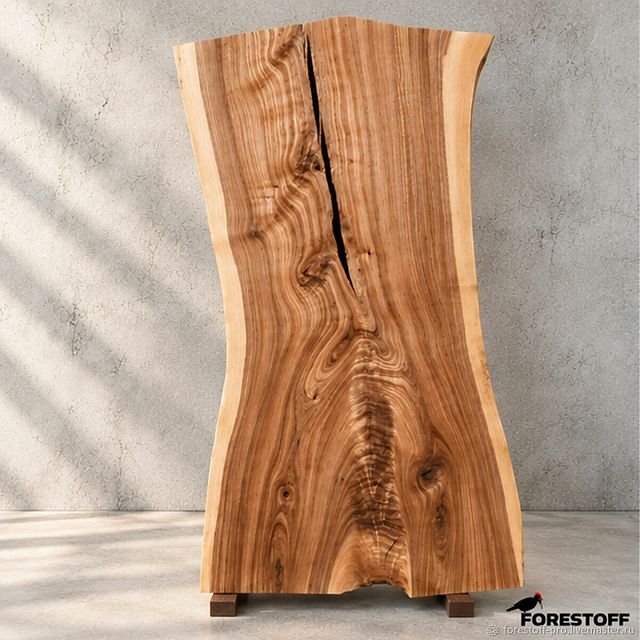
Guardian — 236 cm plane tree slab tabletop
Oriental plane · 2360 × 760–820 × 55 mm
In stock
-
-
Read also
- Caring for solid wood furniture
Simple everyday habits that keep a solid wood table and other furniture looking good for years.