

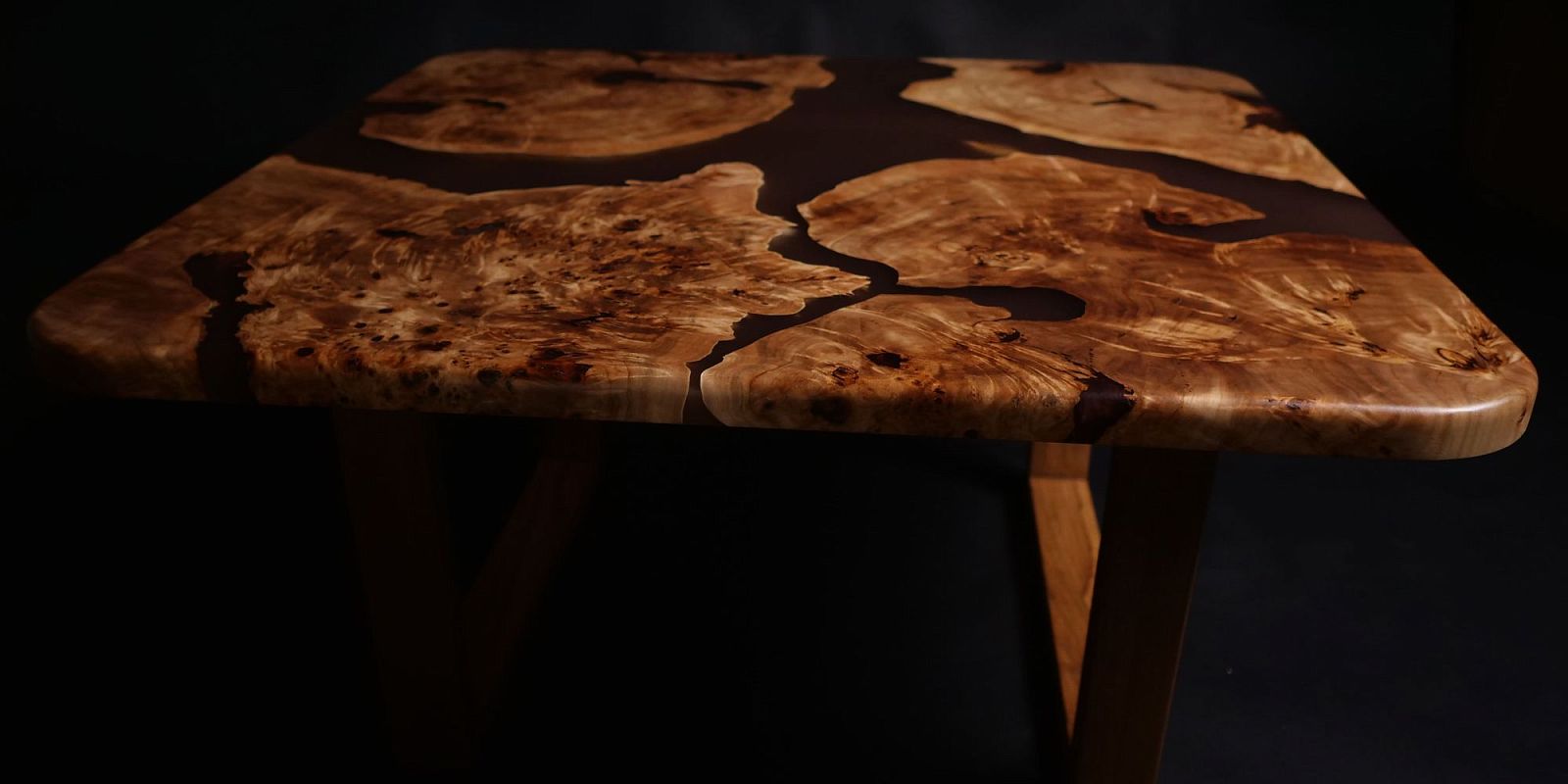
A good tabletop deserves the right base. Mistakes show immediately: the table wobbles, knees hit the apron, or a heavy slab looks precarious on thin legs. We choose the base together with the top, but it helps to know the principles — especially if you're putting a table together in our configurator.
Size and proportions
- The base should be noticeably shorter and narrower than the top, leaving an overhang for legs and chairs. On a dining table the overhang is usually generous enough for someone to sit at the ends.
- A base that's too small for a large top makes the table unstable, especially when someone leans on the edge.
- Round tops usually sit on a central pedestal or an X-shaped frame.
Load and thickness
Solid wood is heavy, and the thicker and longer the slab, the stiffer the base needs to be. For long tops we use bases with a central stretcher or a reinforced frame. Long, thin tops need extra support points so they don't sag over time.
Comfort
- Check there is enough knee room between the chair seat and the underside of the top or apron.
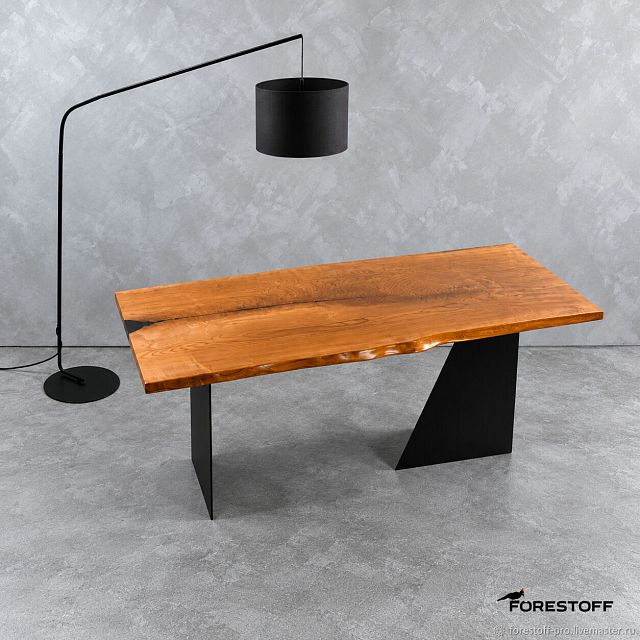
- U-shaped and trapezoid legs set at the ends leave the space under the table clear.
- Central and X-shaped bases suit small and round tables but can get in the way on a long table.
Material and style
Powder-coated steel bases give a light, graphic silhouette and pair well with live-edge slabs. Wooden legs make the table feel unified and warmer. The metal colour is matched to the interior — matt black is the most popular, but other shades are possible.
Wood moves
Solid wood expands and contracts slightly with the seasons. That's why the top is fixed to the base through slotted holes or special fittings that allow a little movement. Fixing it rigidly can cause cracks.
Table height
Height is measured from the floor to the top surface, so the slab thickness counts towards it. Dining and coffee tables differ, and a bar counter needs tall legs with a footrest. If you already have chairs, factor in their seat height.
What we do
- Design the base around the specific top, its weight and dimensions.
- Make steel bases in our own welding shop and wooden ones in our joinery.
- Test-fit the base to the top before dispatch and prepare the fixings.
If you need a base for a top you already have, send your manager its dimensions, thickness and a photo — we'll suggest the right option.
Related products
-
No. LM-57551378
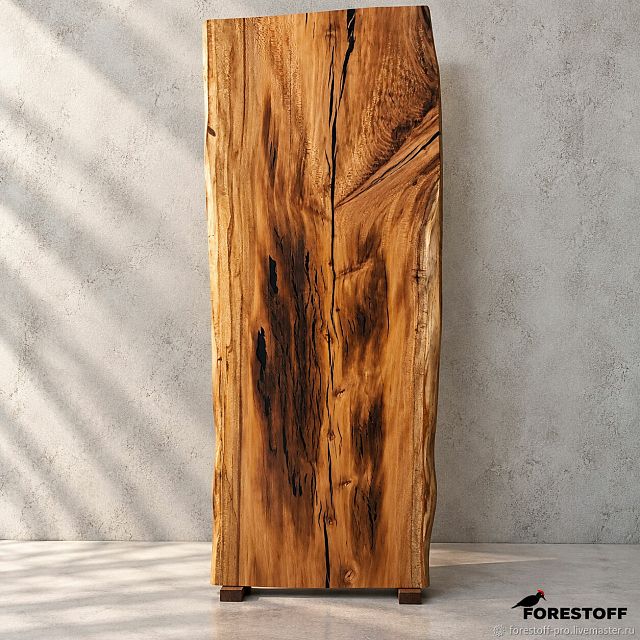
Guardian — 236 cm plane tree slab tabletop
Oriental plane · 2360 × 760–820 × 55 mm
In stock
-
-
Read also
- Assembling and installing a solid wood table
Step by step: preparing the room, assembling the table and levelling it.